
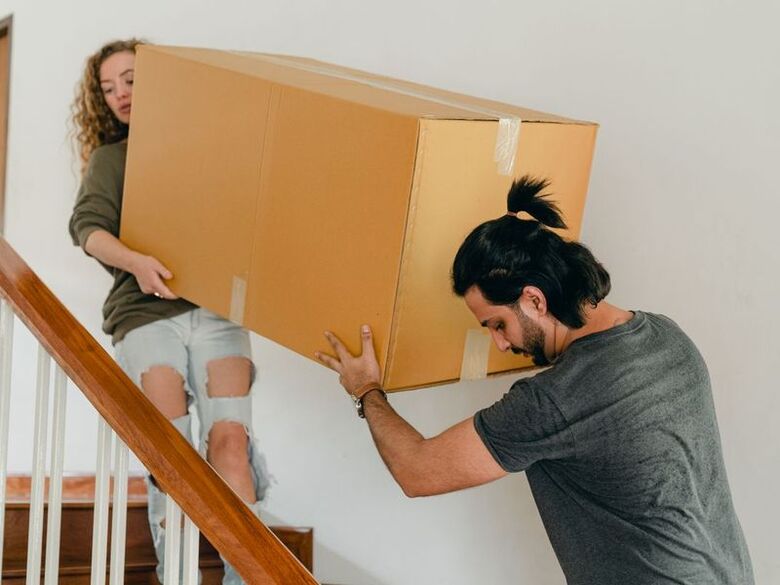
Move-in day at a St. Louis brick home is won or lost on the walk between the parked truck and the parlor floor. Gina Marchetti grew up on The Hill and has been routing crews through Soulard walk-ups and South City two-families since she opened First Place Moves in 2011, and the first thing she teaches a new mover is to read the building before touching a box. Donnie Hayes, our lead crew chief, walks the steep stoops and turning staircases of Lafayette Square the same way. Get the access right and the day stays on time and on budget. Guess at it, and a couch ends up jammed on a landing while everyone else stands around waiting.
Walk the Building Before the First Box Moves
Most South City brick homes were built for foot traffic, not for furniture. Tall stone or brick stoops rise to the entry, interior stairs run narrow and bend hard at a landing, and the block out front holds a single lane of brick with cars parked nose to tail. We shape the carry around those facts, not the other way around.
- The front stoop. We tally the treads and gauge the width. A steep climb changes how many movers we assign to a heavy piece.
- The turn at the landing. A staircase that pivots mid-flight sets a hard limit on what fits standing up versus what we tip and feed through.
- Doorways and the vestibule. Old two-families often hide a snug double-door entry that shaves an inch or so from what looks like a clear opening.
- The truck’s spot. No driveway, permit zones, and a lone travel lane mean we choose where the rig stages before loading day.
The Way We Run a Brick Two-Family
A St. Louis brick move asks for a handful of moves a ranch on a slab never will. Each gets locked in before the ramp comes down:
- Scope the path first. We trace the route off the truck, across the sidewalk, up the stoop, and through every interior turn before quoting you a figure.
- Fit the rig to the block. On a single-lane brick street, we bring the truck that suits it and stage the carry rather than wedging a big box truck where it stops traffic.
- Relay up the stairs. When a tight staircase turns, we station a mover at the landing so a long piece moves through handoffs instead of one strained haul.
- Break down the big stuff on purpose. Bed frames, table legs, and wardrobe doors come off in the front room so nothing wedges going up.
- Keep a lane open. We park to leave room for a neighbor to get by, because a blocked brick street turns a smooth move into a standoff.
Sizing the Tough Pieces to the Staircase
The furniture that fights a Victorian staircase is predictable. Below is the plan for each usual offender so it reaches the second floor whole.
| The Piece | Where it gives trouble | Our handling |
|---|---|---|
| Long couch or sectional | Won’t swing around a landing turn in one piece | Padded, separated into parts, passed upward hand to hand |
| Mattress with its box spring | The box spring refuses to bend at a sharp pivot | Bagged, stood on edge, walked up a flight by a pair of movers |
| China hutch or wardrobe | Runs too wide and top-heavy for a slim flight | Doors and shelves pulled, frame carried level, rebuilt in the room |
| Upright piano, heavy safe | Dense, low-balanced weight over a steep stoop | Donnie skates it on rated planks, full crew, one tread at a time |
| Mirrors, framed artwork | Cracks easily against a brick wall mid-turn | Packed in fitted cartons, hand-carried up dead last |

Protecting Old Plaster and Original Woodwork
The trim in these homes is the reason people buy them. Original newel posts, plaster walls, and stained banisters won’t forgive a careless corner, so shielding them is built into the carry, not bolted on as an afterthought.
- Pad the woodwork. Banisters, door casings, and newel posts get blankets and corner guards before anything heavy comes through.
- Lay floor runners. We cover the original hardwood and any tile entry so grit from the street never grinds underfoot.
- Box the breakables. Glass, mirrors, and art ride in proper cartons rather than balanced on a stair.
- Shrink what fights the turn. Anything that disassembles comes apart so we tip and pivot less near a plaster wall.
Setting Up Your Move on a Tight Brick Street
- Walk us through the access on the phone: the step count, the landing turn, and whether your block runs on permit parking.
- Clear the stoop and stairway of planters, rugs, and bikes the evening before.
- Save a curb spot if you can, since a held space on a tight brick block saves the whole crew time.
- Warn the neighbors about your date, so a parked truck never catches anybody by surprise.
I learned these old brick homes hauling furniture up them in my twenties, and the secret was never muscle, it was sizing up the staircase and the block before we lifted a thing. Scope it ahead and a Soulard walk-up runs like any other job. That is what keeps a First Place move on time and on budget. — Gina Marchetti, owner
First Place Moves is a licensed, insured St. Louis mover with our own employed crew and our own trucks, nothing subcontracted. We hold Missouri Division of Motor Carrier Services authority for in-state household moves, US DOT and MC authority for interstate work, and Illinois Commerce Commission authority across the Metro East, with $1M cargo coverage on every job and no surprise fees. See how a house move runs on our local moving page, condos and walk-ups on our apartment moving page, and every neighborhood we cover on our service areas page.
Frequently Asked Questions
Can a rig reach my narrow brick block when there’s no driveway?
Usually, yes. We scope the block beforehand, send the right-sized truck, and stage the carry so the lane stays open for neighbors. Where parking runs tight, we line up a space or a permit ahead of your date.
How does a sofa go up a tight staircase that bends at the landing?
We measure that bend first, then walk the piece up in a relay with a mover holding the landing. Long furniture travels in handoffs, and anything that disassembles comes apart so it never jams the flight.
Will you protect my original plaster and woodwork?
That’s built into every carry. Banisters, casings, and newel posts get padded, floor protection runs over the hardwood, and big pieces get broken down to keep them off the walls through a turn.
Will a harder brick-home job run higher than an easy one?
Access drives both the crew size and the hours, so we price it straight up front. You get one clear quote with no surprise fees, which is exactly why we ask about your steps and stairs at booking.
What details help most when I schedule a brick-home move?
Your front-step count, whether the stairway bends, the doorway widths if you’ve measured them, and how parking works on your block. A quick photo of the stoop and the stairs lets us lock the plan.
Moving Into a St. Louis Brick Home?
Tell us about your stoop, your stairs, and your street, and our own crew will scope the access and give you one honest flat rate. First Place Moves handles South City, Soulard, Lafayette Square, and the whole metro on time and on budget.